
Shaping Digital Transformation with Blue Ant and Enterprise Architecture
How to manage architecture and the project portfolio together
Shaping Digital Transformation with Blue Ant and Enterprise Architecture
Digital transformation takes more than delivering individual IT projects successfully. Companies have to align their strategic goals, the changes the business needs, and the projects that put those changes into practice. When teams plan architecture and projects separately, they risk spotting dependencies too late, allocating resources where they have little impact, or achieving only some of the intended improvements.
This is where enterprise architecture management and project portfolio management come together. Using a practical example, this article shows how Blue Ant and Essential Cloud can help companies plan business changes, make informed portfolio decisions, and keep delivery aligned with strategic goals.
Consider a company that wants customers to update their own master data through a portal. The aim is to reduce the time customer service staff spend updating records manually. Launching the portal is only part of the work. Customer data must be reliably available, and internal processes must support the new way of working. A single business improvement gives rise to several initiatives that teams need to plan and deliver together.
The following example shows how Blue Ant displays schedules, dependencies, and task status.
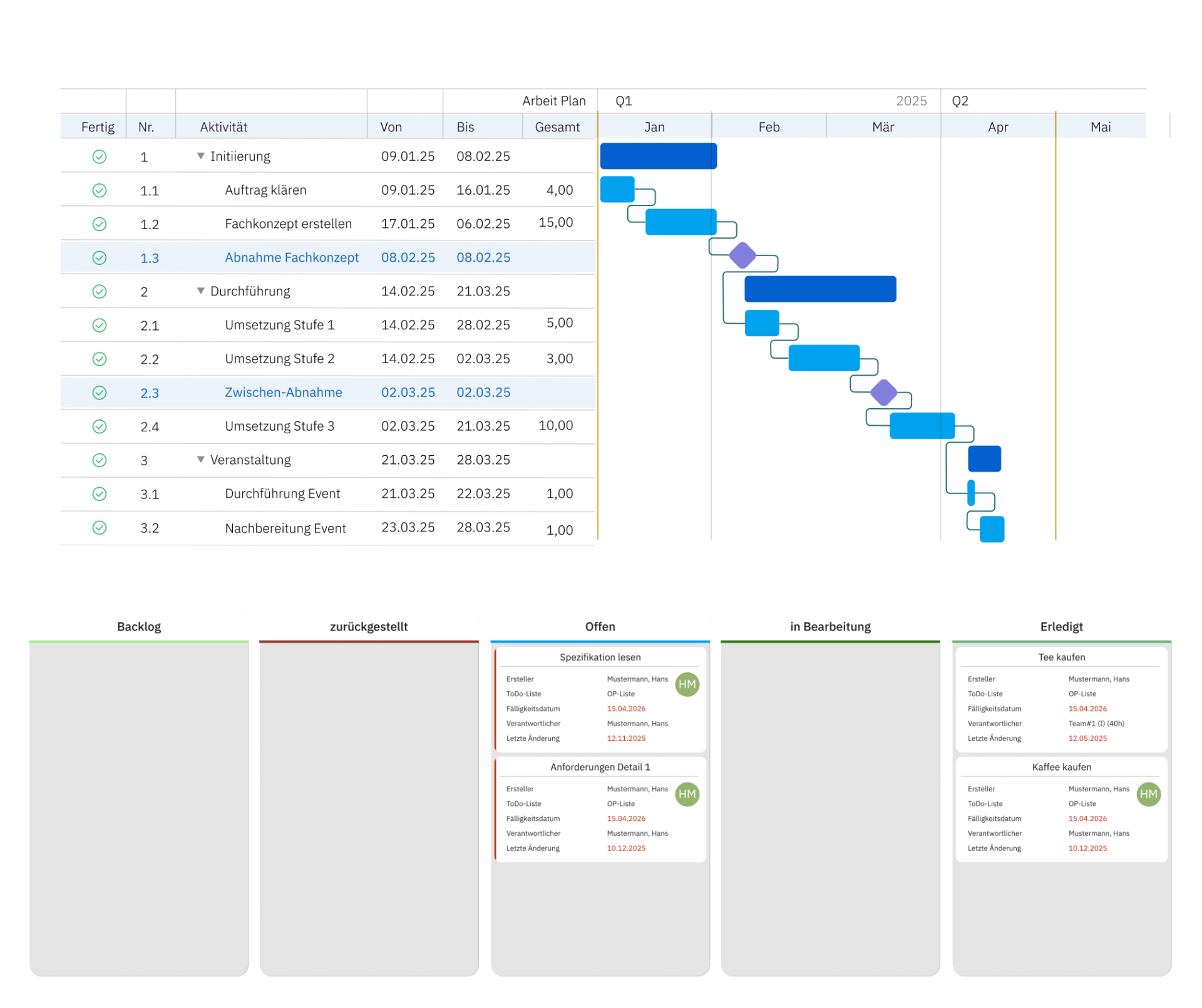
Example from Blue Ant. The Gantt chart shows scheduling dependencies between project activities, and the Kanban board shows the status of each task.
From business change to portfolio decisions
The starting point is to ask what should improve for customers and employees. In this example, the focus is on the ability to manage customer data and handle customer inquiries. In enterprise architecture, these abilities are called business capabilities. They can be grouped into domains such as customer management, which brings related areas of the business together.
Essential Cloud links capabilities to domains and processes. By looking at these relationships alongside the applications that support them, teams can identify the business and technical changes needed to achieve the improvement. For the customer portal, these include changes to how the company manages data and how customer service staff handle requests. This business perspective helps define the scope of the initiatives before a decision is made on whether to proceed.
In Essential Cloud, strategic plans and the architecture changes they describe provide the link to individual projects. In this example, the portal project and a separate project to clean up customer data both contribute to better data maintenance. That relationship matters when setting portfolio priorities because the expected benefit depends on both projects.
In Blue Ant, teams can plan costs, schedules, and resource requirements for each initiative and review them across the portfolio. Information from Essential Cloud helps portfolio managers assess the business significance of each initiative. They can then decide which projects to prioritize together and which prerequisites to address first. They can also see whether several initiatives change the same capability or whether something is still missing for the intended improvement.
From portfolio priorities to coordinated project plans
To deliver the initiatives selected for the portfolio, teams break down the planned changes into tasks. In Blue Ant, they can create to-dos and assign each one to the person responsible. This records who will do the work and what they are expected to deliver. Linking the corresponding project activities also allows teams to account for dependencies in the schedule. In the portal project, for example, the customer data must be cleaned and checked before the integration test that uses it can begin.
To plan for this dependency across projects, the teams need a clear handover agreement. The data project provides a clean set of customer records and agreed rules for maintaining them. The handover includes a test import with documented results. The person responsible for customer management on the business side confirms the quality of the data. The portal project’s test lead then takes over for the remaining tests. Both teams know who delivers what and which conditions must be met before the next activity can begin.
To meet the handover date, the plan in Blue Ant must also account for the people needed to prepare, check, and accept the delivery. An agreed date is of little use if the receiving team is fully booked on other projects at that point. When individual project teams cannot resolve a bottleneck, portfolio managers need to coordinate priorities and resource allocation across the affected initiatives.
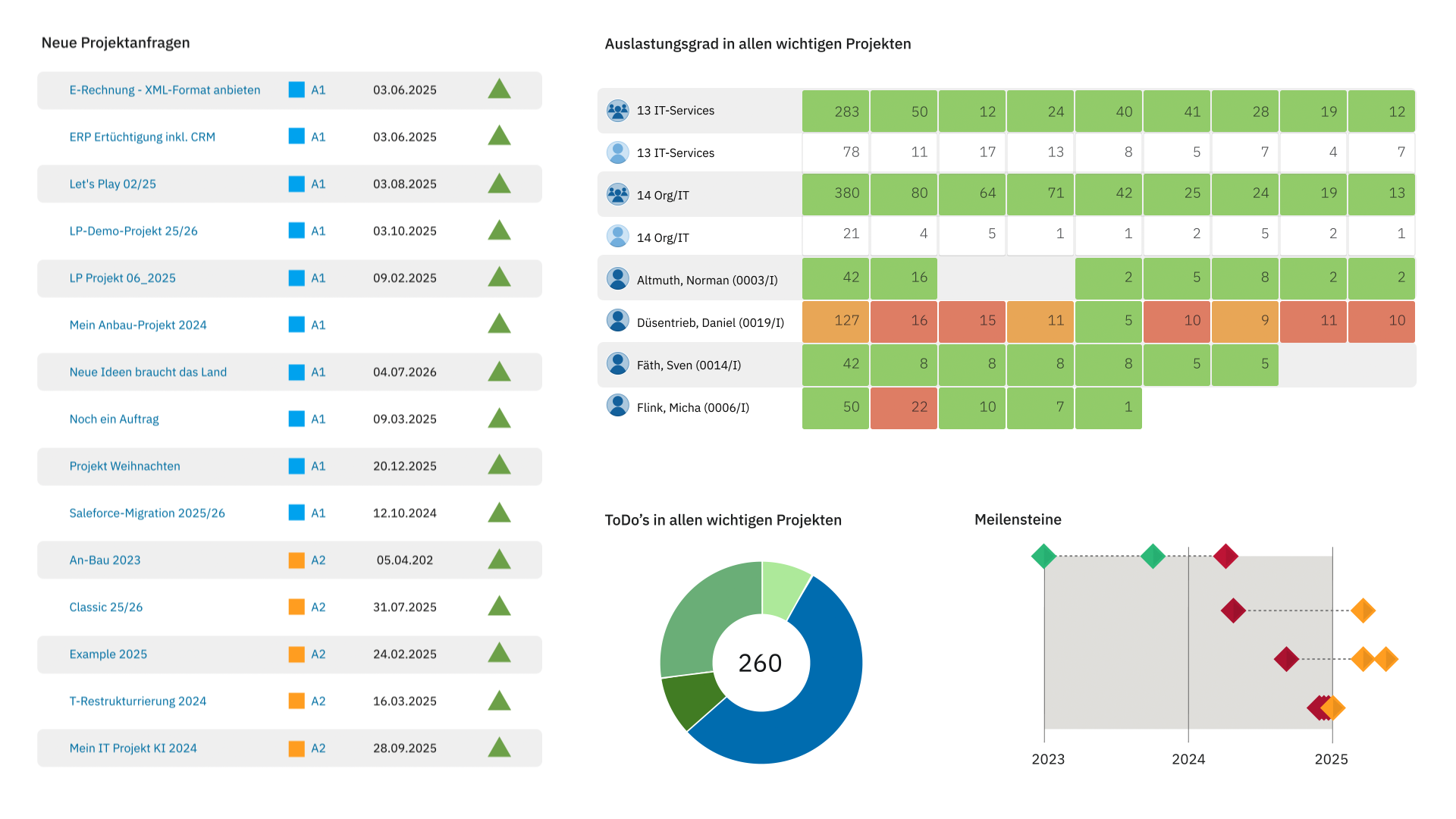
Example from Blue Ant. The view shows resource utilization across projects and upcoming milestones.
Essential Cloud supports this coordination by adding business context to the project information. If the data project is postponed, teams can follow the relationships recorded in Essential Cloud to see which other initiatives, capabilities, and processes in the customer management domain are affected. They can then factor those effects into scheduling and resource decisions and assess whether a revised sequence will still deliver the intended improvements or requires further adjustments.
Assessing budget use alongside results
As work progresses, teams can see whether the plan holds up. Blue Ant supports project monitoring by providing information on costs and progress. A budget burndown chart shows how the remaining budget decreases over time. To decide whether action is needed, project managers have to compare spending with the work completed and the work still ahead.
If the portal project has already spent 70 percent of its budget while data migration, business acceptance, and training are still outstanding, the project manager should check whether the remaining funds will cover that work. A count of completed tasks tells only part of the story. Several minor changes may take less effort than a single outstanding data migration. The assessment should also account for planned expenses incurred early in the project, such as license fees.
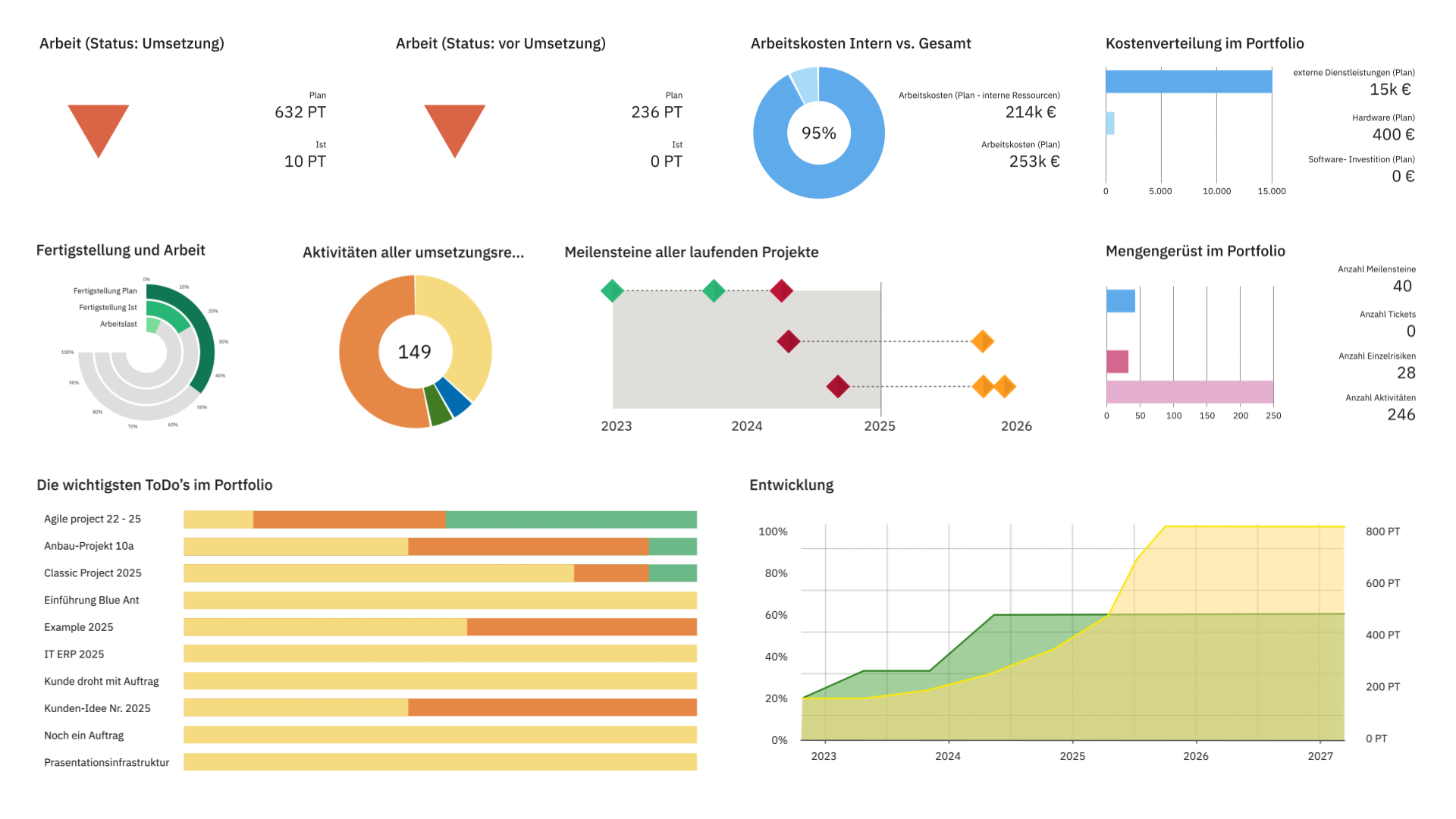
Example from Blue Ant. The portfolio view brings together project requests, resource utilization, tasks, and milestones.
Portfolio managers also need to consider what business outcomes the spending has delivered. A finished interface does little to ease the workload in customer service while customers are still unable to update their own records. The changes described in Essential Cloud give managers a way to check reported project progress against the original goal.
If that comparison reveals a missing prerequisite, managers can adjust the plan. In this example, they could allocate more capacity to the data project while the portal team prepares for acceptance. They could also assess whether a smaller set of features would make a usable first release possible. The decision takes into account both the status of each project and the improvement they are meant to deliver together.
If the project scope changes, the architecture plan needs to reflect that decision. For example, removing self-service data updates from the portal project also removes a major source of the expected reduction in workload. Essential Cloud should then show whether another initiative will take on that change or whether the goal has been deferred. Teams can adjust their plans in Blue Ant accordingly.
A technical integration between Blue Ant and Essential Cloud can make it easier to keep project references, status information, and schedules in sync. The information to exchange depends on the decisions teams make together and who they have agreed will keep it up to date.
Looking at architecture and project information together helps the company assess how close it is to its original goal. For the customer portal, that means tracking costs and schedules and checking whether customers can update their data successfully and whether customer service staff spend less time maintaining records.
Conclusion: Managing architecture and the project portfolio together
Bringing enterprise architecture management and project portfolio management together helps companies coordinate digital transformation across individual projects.
Essential Cloud shows how initiatives relate to strategic goals and business activities. Blue Ant helps teams plan and manage the resulting work. Looking at this information together allows companies to spot dependencies early, prioritize investments, and assess project outcomes against company goals.
Beyond the technical connection between the two tools, what matters is how closely the people responsible for architecture and the project portfolio work together and coordinate decisions across the organization.
Would you like to bring enterprise architecture management and project portfolio management closer together? We can help you develop an approach that fits your organization.

Kai Herings
Senior consultant
Optimize alignment between IT and business with expert advice and clear strategies.
